Plastic loyalty cards turn regular clients into members. A card the size of a credit card, in your colors, with a barcode your POS scans at checkout, tells a client "you belong here" every time she opens her wallet. For nail salons, spas, cafés, bakeries and boutiques that live on repeat visits, a simple loyalty program is one of the most reliable ways to bring people back, and the card is what makes the program feel real.
This guide covers what we have learned printing plastic cards for small businesses across the US: the kinds of programs that work, paper punch cards versus plastic, what your POS system needs on the card, how to design the front and the back, the rules to keep in mind, and how to launch the program so clients actually use it.
Why plastic loyalty cards work
Paper punch cards are cheap and easy, but they get lost, bent and forgotten. A plastic card lives in the wallet next to the credit cards, where it is seen every day, and it lasts for years. Three things make plastic loyalty cards worth considering:
- They feel valuable. A rigid card with rounded corners feels like membership, not a coupon. Clients keep it.
- They connect to your system. A barcode, QR code or magnetic stripe lets your POS look up the member, add points or apply a reward in seconds.
- They carry your brand. Your logo and colors sit in hundreds of wallets, often next to the cards of much bigger brands.
Our plastic cards are 3.375 × 2.125 inches with rounded corners, the same size as a bank card, so they fit wallet slots and card readers made for that size. The size comes from the ISO/IEC 7810 standard for ID cards, described in the Wikipedia article on ISO/IEC 7810.
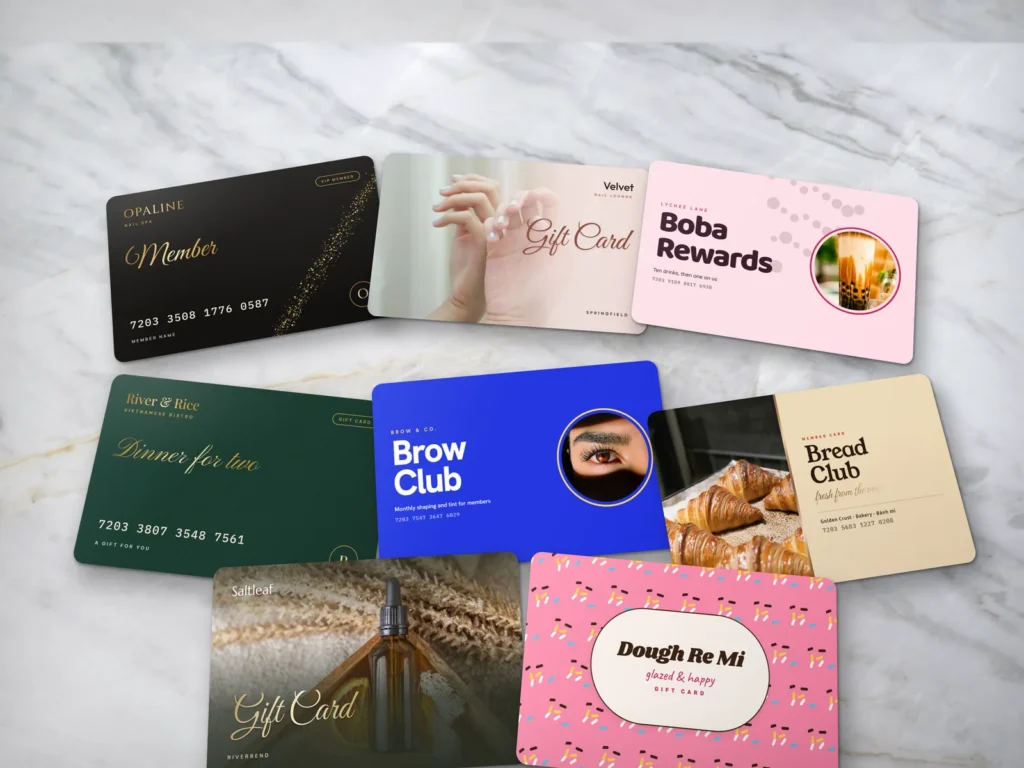
Paper punch cards or plastic loyalty cards?
Both have a place. Many shops start with paper and move to plastic when the loyalty program grows.
| Paper punch or stamp card | Plastic loyalty card | |
|---|---|---|
| How it tracks visits | A punch or stamp per visit | Your POS adds points or visits |
| Lifespan | Weeks to months | Years |
| Lost cards | Progress is lost | The member's record stays in your system |
| Feel | A coupon | A membership |
| Setup | No system needed | Works with your POS's loyalty feature |
| Best for | Simple "10th visit free" offers | Points, tiers, memberships, prepaid packages |
A paper stamp card can be the back of your business card, as we describe in our guide to business card design and printing. Plastic loyalty cards make sense when you already track clients in a POS, or when the program is part of your brand.
6 kinds of loyalty program that work for small shops
1. Visit rewards
"Your 10th visit is on us" or "every 6th coffee free". Simple to explain and easy to run in most POS systems. Keep the reward generous enough to notice and the count short enough to reach.
2. Points
Clients earn points per dollar or per visit and trade them for rewards. Points give you flexibility: double points on slow days, bonus points on birthdays. Make the reward chart simple; nobody reads a long table.
3. Tiers
Silver, Gold and VIP levels with growing perks, such as a free add-on, priority booking or a birthday treat. Tiers suit salons and spas with a core of very loyal clients.
4. Memberships
A monthly membership, such as one massage or one facial a month at a member rate, creates steady income. The card shows membership status and makes check-in quick.
5. Prepaid packages
A package of five pedicures or ten lash fills, paid in advance. The card identifies the package in your POS. Packages reward commitment and fill your book ahead of time.
6. Birthday and anniversary rewards
A treat in the client's birthday month, or on the anniversary of the first visit. It costs little and creates a reason to visit at a predictable time.
Most shops do best with one simple loyalty program, explained in one sentence, on plastic loyalty cards people keep. "Every 10th manicure is free" works better than a complex points table nobody remembers.
Choosing rewards that pay for themselves
The best rewards feel generous to the client and cost the shop less than they seem. A few principles from shops that run a loyalty program well:
- Reward with what you make, not with cash. A free add-on, such as a paraffin treatment, nail art on two fingers or a pastry with coffee, feels valuable but costs you mainly time and materials.
- Fill quiet hours. Double points on Tuesday mornings or a member treat on slow afternoons moves visits from busy times to quiet ones.
- Make the first reward reachable. If the first free visit is a year away, members lose interest. A small reward early keeps them going.
- Keep it simple to explain. If staff need more than one sentence to explain the rewards program, clients will not remember it.
- Avoid deep discounts. A reward that trains clients to wait for 40% off cuts into every future visit.
Review the rewards after three months. If almost nobody has reached one, the target is too high; if everyone has, it may be too low.
What your POS needs on the card
For plastic loyalty cards, the most important technical question is simple: what does your POS system read? Plastic loyalty cards can carry one or more of these, and your POS provider can tell you which one your system uses and in what format.
| Feature | How it works | Good to know |
|---|---|---|
| Barcode | Scanned with a barcode scanner or a phone camera | Ask your POS which barcode type and number format it expects |
| QR code | Scanned with a camera or a scanner | Can hold a member number or a link |
| Magnetic stripe | Swiped through a card reader | Needs a reader that supports it |
| Printed card number | Typed in by staff | A backup for every other method |
| Signature panel | The member signs the back | Adds a personal touch and a little security |
When you order, tell us your POS system and what it reads: our order form has a field for it. We print the barcode, QR code or magnetic stripe it needs, along with a unique number on each card. If your POS needs specific number ranges, send them with your request.
Designing the front of the card
The front is the part clients see in the wallet, so it should look like your shop at its best.
- Logo and name, clearly. The member should know whose card it is at a glance, even half hidden in a wallet slot.
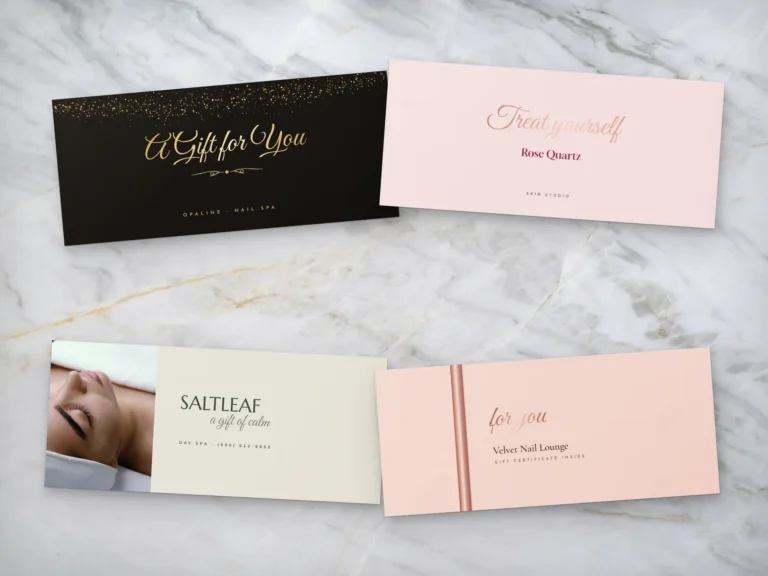
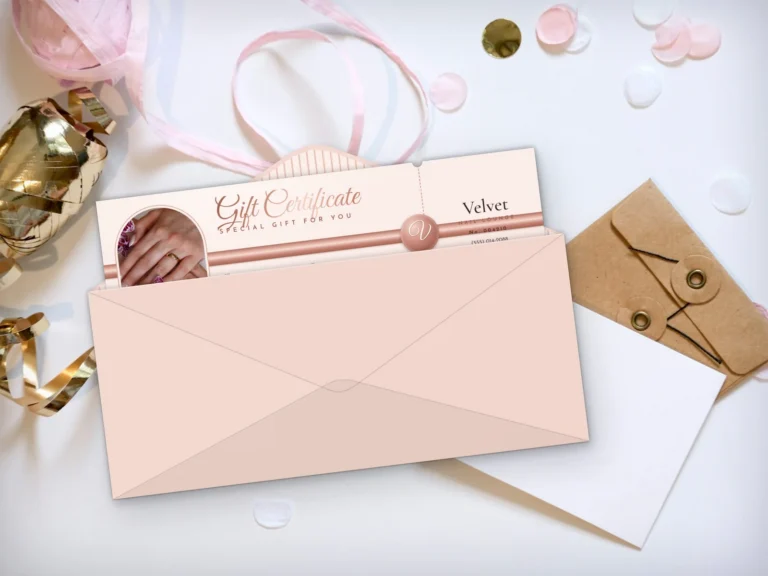
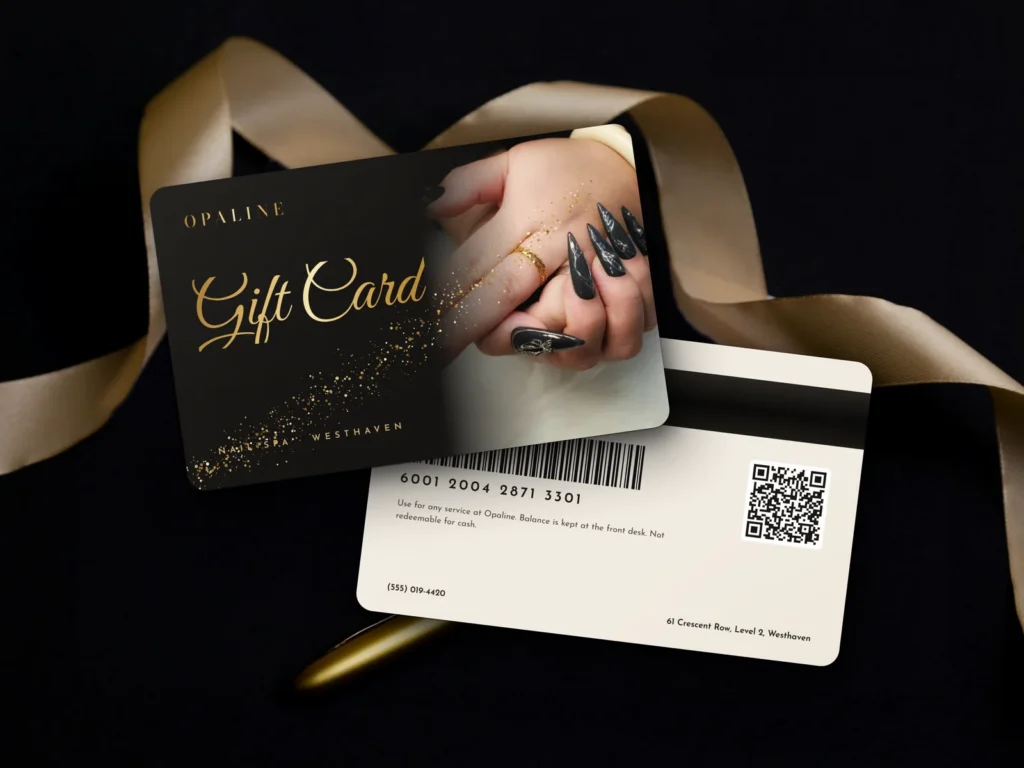
- One strong look. Black and gold, marble, blush, your brand color with a photo. A simple, rich design looks better on a small card than a busy one.
- A name for the program. "Velvet VIP", "Copper Bowl Club", "Golden Crust Regulars". A name makes the loyalty program feel like something to join.
- Keep the edges clear. Rounded corners cut into the design, so keep the logo and words away from the corners.
Designing the back of the card
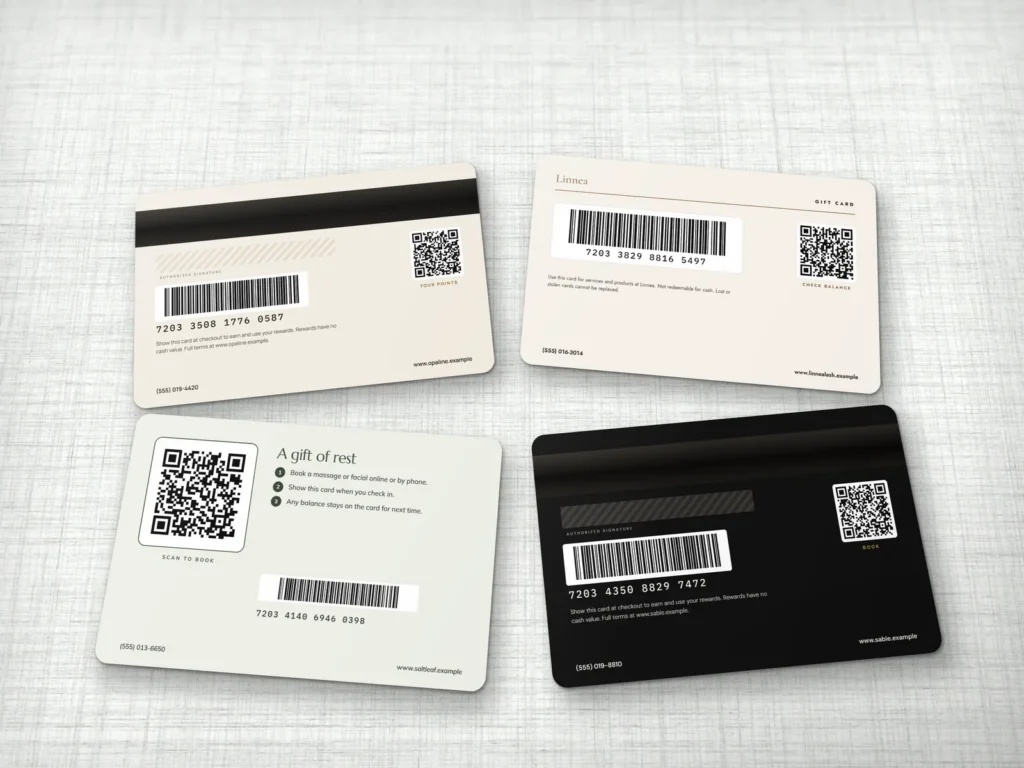
The back does the work. Plan it like a small form:
- The barcode, QR code or magnetic stripe your POS reads
- The card number, printed in clear digits
- A short line about the program: "Earn a free manicure every 10 visits"
- Your phone number and website or booking link
- A signature panel, if you use one
- Short terms: "Not redeemable for cash. Card remains property of the shop." in plain words
- Any wording your rules require (see below)
Keep the barcode or stripe on a plain white or light area so scanners read it easily, and keep text at a readable size: 7 points is the minimum for fine print, larger for anything clients must read.
Numbering and activating cards
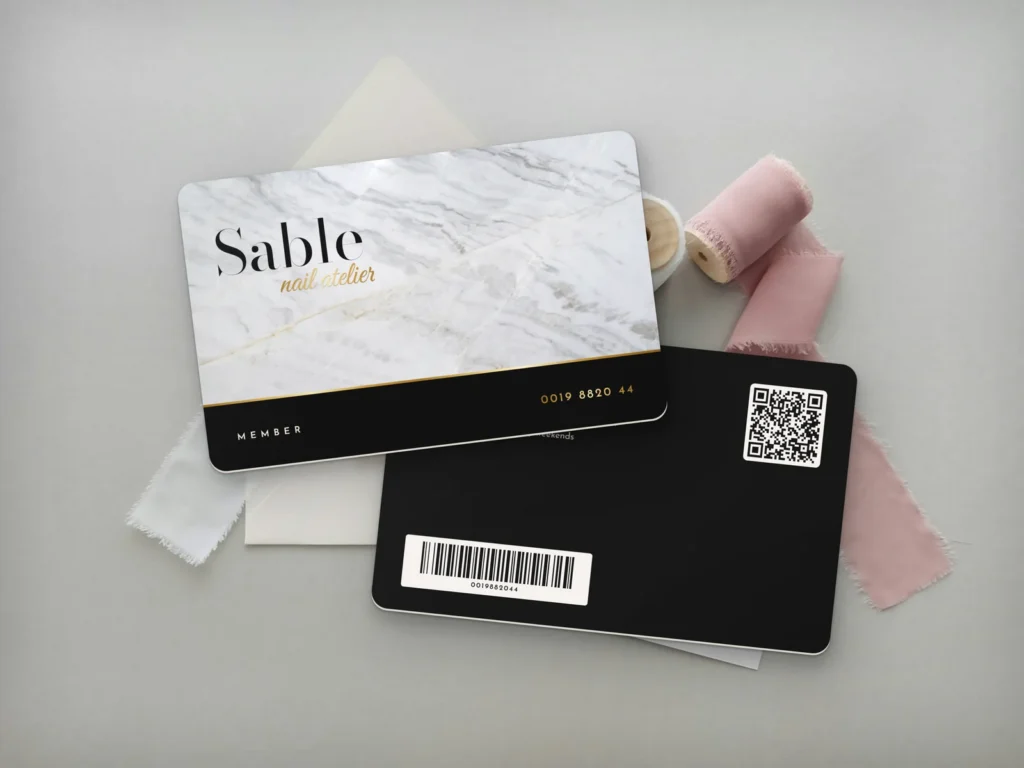
Every card should carry a unique number, printed and, where used, encoded in the barcode or stripe. Order the numbers in a range that does not clash with other cards in your system, such as gift cards.
Activation is usually done at the register: when a client joins, staff scan the card and attach it to the client's profile. Keep a small stack of cards behind the counter, not on it, so they are handed out by staff with a quick explanation. A card a client picks up alone, without hearing what it does, is rarely used.
Loyalty cards, gift cards and the rules
A loyalty card that only identifies a member is different from a card that holds money. If your card carries a dollar balance, for example a prepaid package or a gift card, gift card rules may apply. Federal rules in Regulation E set requirements for store gift cards, and they treat cards given out as part of a loyalty, award or promotional program differently, with their own disclosure requirements printed on the card. You can read them on the Consumer Financial Protection Bureau's site. State rules can add more.
In practice: if your card holds money, check the wording with your POS provider or your accountant before printing, and we print the terms exactly as you approve them. Our guide to gift certificates for small business covers the same rules for paper certificates.
Launching the program so clients use it
A loyalty program fails quietly when nobody knows about it. A few habits help it take off:
- Train the team on one sentence. "Would you like a member card? Every 10th visit is free." Everyone says the same thing.
- Offer it at checkout, every time, for the first month. That is when most members join.
- Show it at the counter. An acrylic counter stand with the program in one line and a sample card makes clients ask about it.
- Give the first reward fast. A welcome bonus, such as double points on the first visit, makes the card feel useful from day one.
- Remind members. A line on your receipts or a postcard to members with a birthday reward keeps the card in use.
If you sell cards as gifts too, a printed gift card holder turns the same plastic card into a present. Our guide to gift card envelopes covers holders and presentation.
Keeping members active
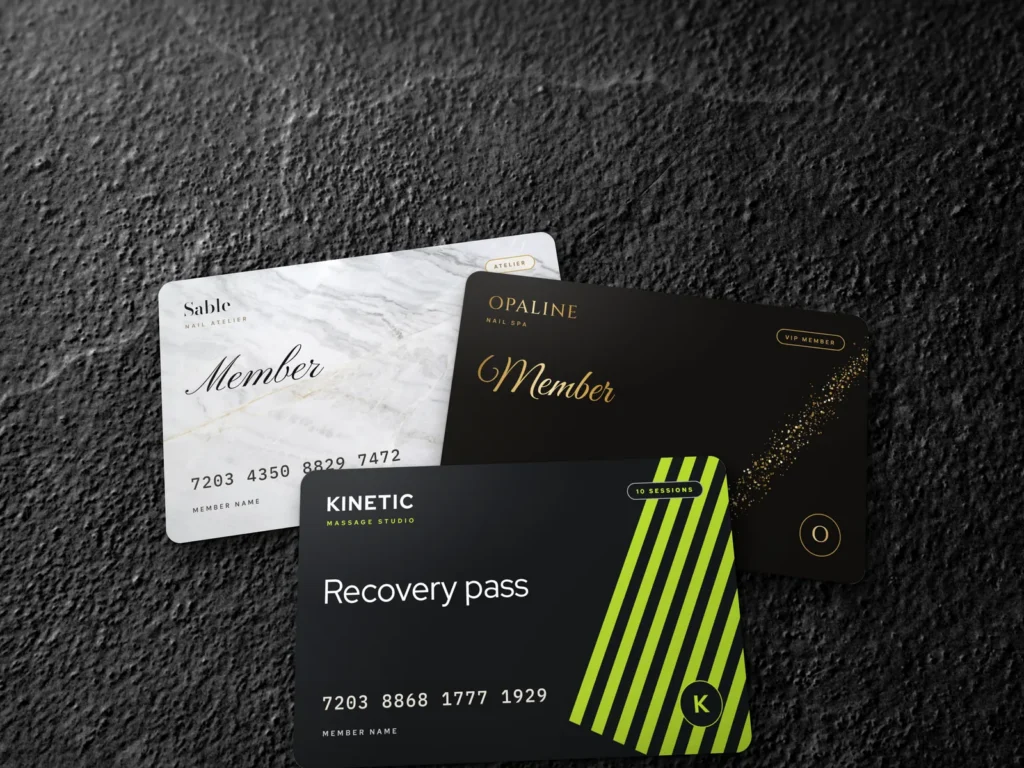
The hardest part of a loyalty program is not the launch; it is month six, when the card sits in the wallet and the client forgets it. A few habits keep members coming back:
- Show the progress. A line on the receipt such as "3 visits to your free pedicure" reminds members every time they pay.
- Celebrate birthdays. A birthday reward, announced on a postcard or by text, gives members a reason to book in a month you can predict.
- Offer member-only moments. Early booking for holidays, a members' day with a small treat, first look at new colors or new dishes.
- Welcome them back. If a member has not visited in two or three months, a short note with a small bonus often brings them back.
Plastic loyalty cards are what members carry; these habits are what make them use the card.
Ideas by trade
Nail salons and lash studios: "Every 10th fill free", a VIP tier with priority booking for holidays, and birthday nail art. Black and gold or blush cards look at home in a beauty wallet.
Spas and massage studios: monthly memberships at a member rate, with the card showing membership status. Calm, premium designs, such as marble or sage.
Cafés and bakeries: "Every 9th coffee free" or points per dollar, plus double points on slow afternoons. Bright, friendly designs suit the trade.
Restaurants: points toward a free dish, VIP status for regulars, a birthday dessert. Keep the reward easy to understand at a busy register.
Boutiques and beauty supply shops: points per dollar, member-only sale days and early access to new arrivals.
Ordering checklist for loyalty cards
Have these answers ready when you order, and the first proof will be close to final:
- The name of your POS system and what it reads: barcode, QR code or magnetic stripe
- The number range or format your POS expects for loyalty cards
- The name of the program and the one-sentence reward
- Front design: your logo, colors and any photo
- Back text: program line, phone, website, short terms
- Printing: full color front with a black back, or full color on both sides
- Extras: signature panel, numbering
- Quantity, and the date you need the cards
Common loyalty card mistakes
| Mistake | What happens | Fix |
|---|---|---|
| A program too complex to explain | Clients ignore it | One sentence, one reward |
| Barcode the POS cannot read | Staff type numbers by hand, or give up | Confirm the barcode type with your POS first |
| Text on top of the barcode area | Scans fail | Keep the barcode on a plain light area |
| Cards left on the counter for anyone | Cards never activated | Hand them out at checkout with a sentence |
| Money on the card without proper terms | Problems with gift card rules | Check the wording before printing |
| No reminders | Members forget | Receipts, postcards, birthday rewards |
Questions about plastic loyalty cards
What size are plastic loyalty cards?
Ours are 3.375 × 2.125 inches with rounded corners, the size of a bank card, so they fit wallets and card readers.
Will the card work with my POS system?
It should, as long as we print what your system reads. Tell us your POS and whether it uses a barcode, a QR code or a magnetic stripe, and send any number ranges it needs.
Can each card have its own number?
Yes. Every card gets a unique number, printed and, where needed, built into the barcode or QR code.
Can the same card be a gift card and a loyalty card?
Some POS systems allow it. Ask your POS provider; if the card holds money, check the gift card rules for the wording.
Paper or plastic, which should I start with?
If you track clients in a POS, start with plastic loyalty cards. If you want the simplest possible program, a stamp card on the back of your business card is a good first step.
How many cards should I order?
Think about how many clients you expect to join in the first months. Cards with numbers can be reordered later in the next number range.
Can you design the cards to match my shop?
Yes. Send your logo and colors, or pick one of our designs, and we prepare a proof of both sides. Our guide to the printing proof explains what to check, including the card numbers.
The short version
Plastic loyalty cards make a rewards program feel like membership and connect it to your POS. Choose one simple program, confirm what your POS reads, design a clean front and a working back with a barcode, number and short terms, and launch it with one sentence at checkout. If the card holds money, check the rules first.
When you are ready, add plastic cards to your quote list, tell us your POS system and the number range, and we print your loyalty cards in Norcross, Georgia.