Business card paper is what people notice before they read a single word. A client picks up your card and, in half a second, decides whether it feels solid or flimsy, shiny or calm, cheap or special. That impression comes from two choices: the card stock, which sets the thickness and stiffness, and the finish, which sets the surface. The words and design matter just as much, but the paper is what makes a card feel like your shop.
This guide explains the business card stock options we print, what the numbers mean, how gloss and matte differ, when a thick triple-layer card or a plastic card is worth it, and how to choose a business card finish that fits the way you use your cards. It follows our guides to business card design and printing and the standard business card size.
What "14 pt" and "16 pt" mean
In the US, card stock thickness is usually measured in points, where one point is one thousandth of an inch. A 14 pt card is about 0.014 inch thick; a 16 pt card is about 0.016 inch. The difference sounds tiny, but in the hand it is easy to feel: 16 pt is noticeably stiffer.
You may also see card stock described by weight, such as "100 lb cover". That number is the weight of a ream of a standard sheet size, not the thickness, and it depends on the kind of paper. Points are simpler for business cards because they describe exactly what you feel: how thick the card is. The Wikipedia article on card stock explains both systems if you want the details.
| Business card stock | Thickness | How it feels | Good for |
|---|---|---|---|
| 14 pt | About 0.014 in | Solid, everyday card | Cards handed out in large numbers |
| 16 pt | About 0.016 in | Stiffer, more premium | Shop cards, personal cards, appointment cards |
| Triple-layer | Three sheets pressed together | Very thick, colored edge | Luxury salons, spas, boutiques |
| Plastic (PVC) | Rigid, credit card style | Like a bank card | Gift, membership and loyalty cards |
Our standard business cards come in 14 pt and 16 pt card stock, with a gloss or matte finish.
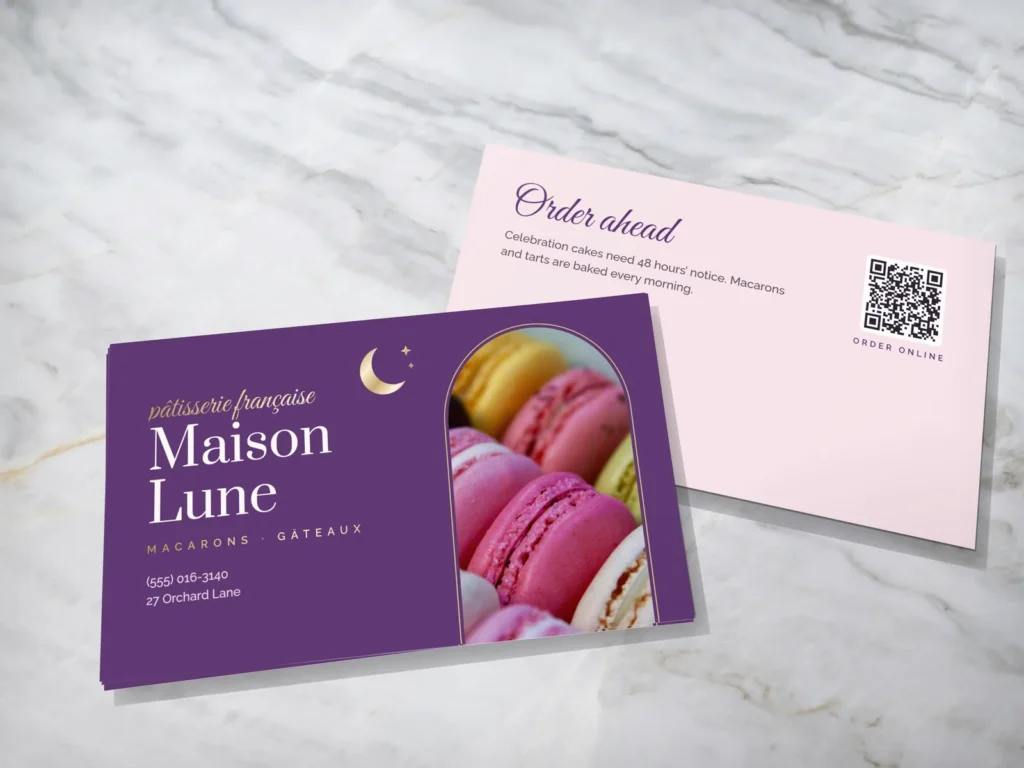
14 pt or 16 pt: which business card paper to choose
Both kinds of business card stock are good cards, and both hold up in a wallet. The choice comes down to how many you hand out and how you want the card to feel.
Choose 14 pt when you hand out many cards: a busy salon that gives a card to every client, a restaurant with a stack by the register, a shop that tucks a card into every bag. It is a sturdy everyday card, and quantity matters more than heft.
Choose 16 pt when the card is your first impression: a new spa, a lash studio with a premium brand, an owner's personal card, an appointment card clients keep for weeks. The extra stiffness feels deliberate.
If you are unsure, hold both. Many owners choose 16 pt for their own card and 14 pt for the shop's everyday card.
Gloss or matte: choosing the business card finish
The business card finish is the surface of the card, and it changes color, feel and how the card takes a pen.
Gloss is smooth and shiny. It makes colors deep and photos rich, so nail art, food and bright brands look their best. It reflects light, which can make small text harder to read under strong lamps, and ballpoint pens skip on it.
Matte is smooth and calm, with almost no shine. It softens colors slightly, reads well under salon lights and takes a pen, which matters for appointment cards, reward cards and anything clients write on. It also hides fingerprints.
| Gloss | Matte | |
|---|---|---|
| Color | Deep, saturated | Softer, calmer |
| Photos | Rich and sharp | Natural, a little softer |
| Writing on it | Pens skip and smear | Takes a pen well |
| Under bright lights | Some glare | No glare |
| Feel | Slick, shiny | Smooth, velvety |
| Best for | Photo-led cards, bright brands | Appointment and reward cards, minimal designs |
A simple rule: if anyone will write on the card, choose matte. If the card is mainly a photo of your work, choose gloss.
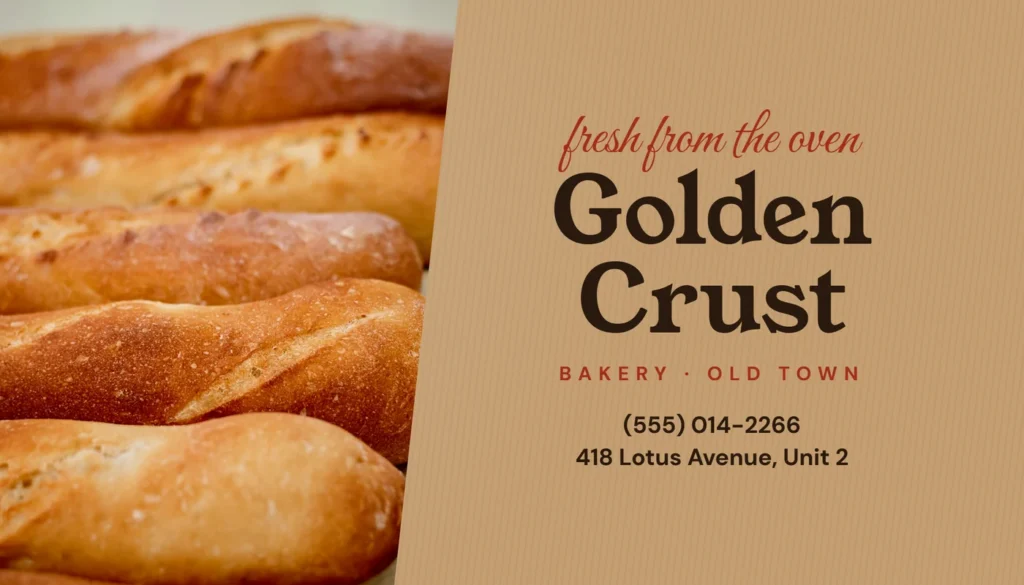
Triple-layer cards: when thickness is the message
A triple-layer card is three sheets pressed together into one very thick card, with a colored middle layer that shows as a thin line around the edge. Gold, magenta, black or a brand color in the core makes the edge part of the design. People notice the weight the moment they pick it up.
Triple-layer business cards suit businesses where the first impression carries the brand: luxury nail lounges, day spas, PMU clinics, boutiques and florists. They are printed on both sides and keep the standard 3.5 × 2 inch size, so they still fit wallets and card holders.
They are not the best choice for cards you give away by the hundred every week, or for cards people write on daily; for those, a 14 pt or 16 pt matte card works better.
Shaped cards: die-cut stock
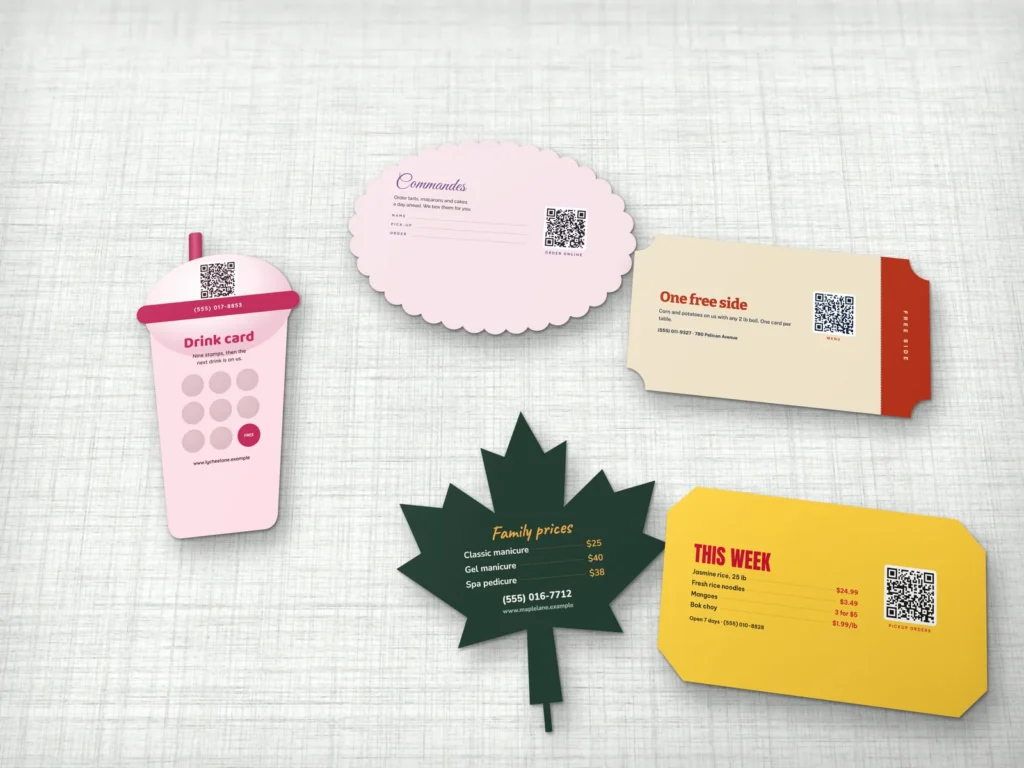
A card does not have to be a rectangle. Die-cut business cards are cut to a shape: round, oval, leaf, rounded square, a rectangle with rounded corners or a single rounded corner, even folded. They are printed on 14 pt or 16 pt card stock with a gloss or matte finish, just like standard cards. A round card with a round logo, or a leaf-shaped card for a spa, stands out in a pile of rectangles.
Plastic cards: when paper is not enough
For gift cards, memberships and loyalty programs, paper wears out too fast. Plastic cards are rigid, credit card sized and rounded at the corners, and they can carry a barcode, QR code or magnetic stripe for your POS. They last for years in a wallet. They are not meant to replace everyday business cards, but they are the right "card stock" when the card itself holds value. Our guide to plastic loyalty cards explains how they work.
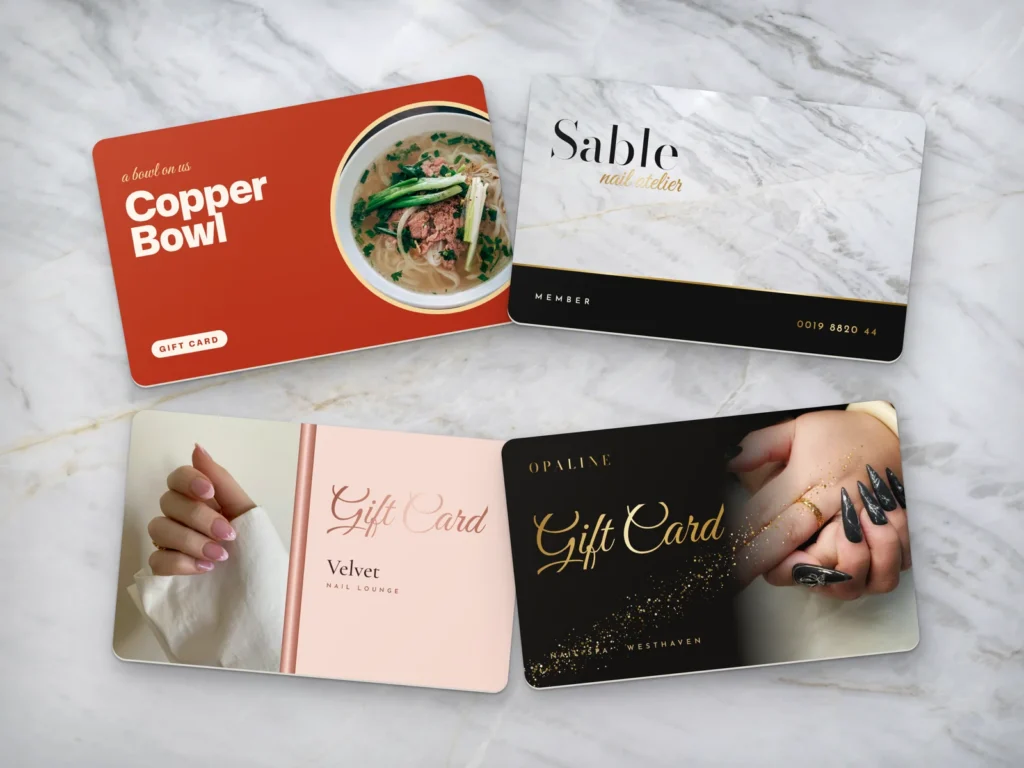
How business card paper changes color
Paper and finish change how printed colors look, which is worth knowing before you choose.
- Gloss keeps colors closest to what you expect: rich reds, deep blacks, bright photos.
- Matte softens colors slightly and makes dark colors a touch lighter. Elegant designs often look better for it.
- Kraft-look designs imitate warm brown paper with a printed texture, which keeps colors controlled while giving a handmade feel.
Our guide to CMYK vs RGB explains why screen colors and printed colors differ, and why the paper is part of that.
Match the paper to how the card is used
The best way to choose business card paper is to picture the card's daily life.
| How the card is used | Suggested stock and finish |
|---|---|
| Given to every client at checkout | 14 pt, matte if it has an appointment back |
| Appointment or reward card clients write on | 16 pt matte |
| Photo of your nail art or food on the front | 16 pt gloss |
| Owner's personal card for partners and suppliers | 16 pt matte, or triple-layer |
| Luxury spa or boutique brand | Triple-layer |
| A playful brand with a round logo | Die-cut round, 16 pt |
| Gift, membership or loyalty card | Plastic |
You can also order two cards: an everyday shop card on 14 pt and a premium card for special clients or partners. Keep the design the same on both, so the difference is felt in the hand rather than seen on the card, and clients recognize your shop whichever card they receive.
Business card paper by trade
Every trade uses cards a little differently, and the right business card paper follows that use.
Nail salons. Most nail salons hand a card to every client, often with the next appointment written on the back. A 14 pt or 16 pt matte card takes a pen easily and hides fingerprints from busy hands. If the front is a close-up of nail art, some salons choose gloss and keep a separate matte appointment card.
Lash, brow and PMU studios. Clients keep the card in a bathroom drawer for aftercare tips. A 16 pt matte card feels calm and premium, and a triple-layer card suits studios that position themselves as luxury.
Spas and massage studios. Matte card stock in a soft color matches the mood of a spa. For a high-end day spa, a triple-layer card with a sage, gold or black core makes the first impression feel like the treatment room.
Restaurants and cafés. A food photo on the front looks best in gloss. A card left in a stack by the register should be 14 pt, because many will be taken.
Bakeries and coffee shops. Loyalty stamp cards need matte, so stamps and pens work. Kraft-look designs suit the trade and print well on matte stock.
Boutiques and florists. A 16 pt card with a calm matte finish, or a die-cut leaf or round shape, feels like part of the shopping bag.
Thickness, wallets and wear
A business card lives a rough life: pockets, wallets, purse bottoms, car cup holders. Card stock thickness decides how it looks a month later.
- Thicker cards resist bending. A 16 pt card keeps its shape longer in a wallet than a 14 pt card; a triple-layer card hardly bends at all.
- Corners wear first. Square corners can soften or curl after weeks in a wallet. A die-cut card with rounded corners stays neat longer.
- Matte hides wear. Small scuffs and fingerprints show less on matte than on gloss.
- Plastic outlasts everything. For a card meant to be used for years, such as a membership card, plastic is the right material.
If your clients carry your card for a long time, such as an appointment card used every few weeks, the extra thickness of 16 pt is money well spent.
Ordering more than one kind of card
Many shops end up with two or three kinds of cards, each on the right stock:
- An everyday shop card on 14 pt, handed out freely.
- A personal card for the owner or manager on 16 pt or triple-layer, for partners, suppliers and special clients.
- A loyalty or membership card in plastic for regulars.
They can share one design, so they look like a family, while the business card paper and finish match each job. Order them together and we keep the colors consistent across all three.
Common business card paper mistakes
| Mistake | What happens | Better choice |
|---|---|---|
| Gloss for an appointment card | Pens skip, appointments get smudged | Matte |
| Thin stock for a premium brand | The card feels cheap in the hand | 16 pt or triple-layer |
| Triple-layer for cards handed out by the hundred | Expensive for a card most people glance at once | 14 pt for everyday cards |
| Paper loyalty cards for a points program | Cards wear out, progress is lost | Plastic cards with a barcode |
| Choosing stock without seeing the use | The card does not fit how it is used | Describe the use and ask us |
Other finishes you may have heard of
Print shops offer many special effects: metallic foil, raised spot gloss, soft-touch coatings, embossing, painted edges. They can be beautiful, and they also add steps and cost. Many of the designs in our library show a foil-look accent printed in color, which gives a similar feel without special equipment. If you want a real special finish on your cards, ask in your request and we tell you what is possible for that product and quantity.
A quick way to decide
If you are still unsure, answer three questions:
- Will anyone write on the card? If yes, choose matte.
- Is the card your first impression with new clients or partners? If yes, choose 16 pt or triple-layer.
- Do you hand out more than a few cards a day? If yes, 14 pt keeps a large supply practical.
Most shops land on 16 pt matte for an appointment card and 14 pt for everyday hand-outs. Whatever you choose, the proof shows your design exactly as it will print, and our guide to the printing proof lists what to check before you approve. If you want help, describe how you use your cards and we suggest the business card paper and finish that fit.
Caring for your cards
Business card paper lasts longer when it is stored well. Keep boxes flat in a dry place, away from heat and sunlight, which can fade colors and warp stock. Humidity is the quiet enemy: a box stored near a pedicure tub or a kitchen can curl at the edges within weeks. Keep the main supply in a closet or an office drawer and refill the front desk holder every few days. Put a small stack in a card holder at the front desk rather than a loose pile, so cards stay clean. Matte cards hide fingerprints better than gloss if many hands touch the stack.
Questions about business card paper
What is the best business card stock?
For most shops, 16 pt is a great all-around choice: stiff enough to feel premium, practical for daily use. Choose 14 pt for very large quantities and triple-layer when the card should feel luxurious.
Is matte or gloss better for business cards?
Matte if anyone writes on the card or if your design is calm and minimal. Gloss if the card is mainly a photo or your brand uses bright colors.
Can I write on a gloss card?
A permanent marker works; a ballpoint pen usually skips or smears. For appointment cards, choose matte.
What does pt mean for card stock?
Points measure thickness in thousandths of an inch. A 16 pt card is about 0.016 inch thick.
Are triple-layer cards the same size as normal cards?
Yes. They keep the standard 3.5 × 2 inch size; they are just much thicker, with a colored layer in the middle.
Does thicker card stock change the price?
Thicker stocks and special cards such as triple-layer generally cost more than standard ones. Your quote lists the stock you chose, and you can ask us to quote two options side by side.
Can one card be gloss on the front and matte on the back?
Our standard cards have one finish for the whole card. If you need a writable back and a glossy photo front, a matte card with a strong photo is usually the best compromise; ask if you need something special.
Can I see the paper before ordering?
Ask in your request. We describe the stocks and finishes for your product, and the proof shows your design exactly as it will print.
The short version
Choose business card paper by how the card is used. 14 pt for everyday cards in large numbers, 16 pt for a premium feel, triple-layer when thickness is the message, die-cut when the shape is, and plastic when the card holds value. Pick matte for anything people write on and gloss for photo-led designs.
When you are ready, add standard business cards or another card type to your quote list and tell us the business card stock and finish you prefer. Not sure? Describe how you use your cards, and we suggest the right card stock before the proof.